Education – open data sources

Before Christmas myself and Joy Gibara from the Looked After Children Education Service in Birmingham City Council attended the Hacking education data meet up at Urban Coffee Company.  I worked in various admin and IT related education roles for quite a few years and Joy obviously has current knowledge in the area

We talked to the group about some of the data sources we know about and promised to write a post collecting them together for people. So, here it is. It is worth noting that these are predominantly school-based and sometimes relate specifically to Birmingham.

school tower

Continue reading

Posted in Data, Uncategorized | Tagged , , , | 1 Comment

Part 2: Who gets the money docked from striking teachers?

Back in November, I wrote a post asking who gets the money docked from striking teachers. The question came from @schoolgate and it’s a very valid question.

I submitted a Freedom of Information request to the DfE and a few weeks ago, I received a response. Continue reading

Posted in Community question | 2 Comments

Free school meals in Scottish primary schools – data visualisation

We’ve helped scrape data on free school meals in Scottish schools for The Scotsman’s new data blog.

As the percentage of pupils registered for free school meals is an indicator of deprivation (although it has notable flaws*) it provides one visual picture of poverty across Scotland.

View Free school meals in Scottish primary schools in a full screen map

The raw data can be found here. Note that free school meals data is missing for just over 300 schools, either because the numbers of pupils registered was so low that publication of data could lead to the identification of individuals, because the school does not provide meals, or because data is not reported by the school.

Also note that placement of markers is based on postcodes, and so may not be particularly accurate.

The data was obtained by scraping the data from over 3,000 pages on the Education Scotland website, using Scraperwiki (you can see the scraper here). As the page for each school had its own URL based on the school’s ID, the scraper had to generate URLs for each school from a list of codes obtained by Jennifer O’Mahony of The Scotsman. You can read more about this process and how it can also be done using Google Refine on the Online Journalism Blog.

Initial visualisations using the free online mapping service batchgeo placed some of the markers in England or Europe, so Google Refine was used to fetch latitude and longitude data for each postcode. (Instructions on how to do this can also be found on OJB here and here).

Another problem encountered was poor colour-coding of markers when schools with no data were included, so these were removed from the dataset pasted into batchgeo.

Note also that the free version of batchgeo has a limit of 2,500 rows, so if you wanted to map more schools, you would have to pay for the Pro version, or use another free service.

There’s more to be done with this data. For example, instead of basing the visualisation on the percentage of free school meals you could do it on the basis of variation from each school’s local authority rate of free school meal registration. Whereas the map above provides a national picture, this would give a picture of local variation, e.g. which parts of an authority are much lower than the LEA average, and which are higher.

*More on poverty indicators for children and historical trends can be found at The Poverty Site.This research paper (PDF) looks at the reliability of free school meals data and concludes that it is “coarse and unreliable” while policy consultant Patrick Watson points out that the formula used to calculate it is “all or nothing”, with those earning above or below a particular threshold (around £16,000 at the time of writing in 2011) either eligible or not. “It is also a purely economic indicator,” he adds, “and does not take into account that certain communities are culturally rather than financially deprived.”

Posted in Data | Tagged , , , , , , , , , , | 6 Comments

Link: schools mis-sold leases on computer equipment

5 Live Investigates have been looking in to the leasing of computer equipment to schools on terms that leave them paying up to 10 times what they should:

“the Leasing Advisory Service, a claims management company which represents victims of mis-sold leases says it has identified a particular problem with schools leasing computer equipment. Continue reading

Posted in Uncategorized | Tagged , , , , , , | 5 Comments

Data vis: the drop in university applications

More from Caroline Beavon, this time on what type of university courses have been hardest hit by the drop in applications. Her visualisation of data from The Guardian’s Datablog is reproduced below:

University application drops by subject area

Posted in Data | Tagged , , | Leave a comment

VIDEO: Tips on investigating education from Fiona Millar

Fiona Millar is an experienced journalist and campaigner who publishes The Truth About Our Schools, a website and blog covering the education sector. I met up with Fiona to ask what advice she would give to people wanting to investigate education-related issues – here are her tips.

Posted in Tips and How-Tos | Tagged , , | 1 Comment

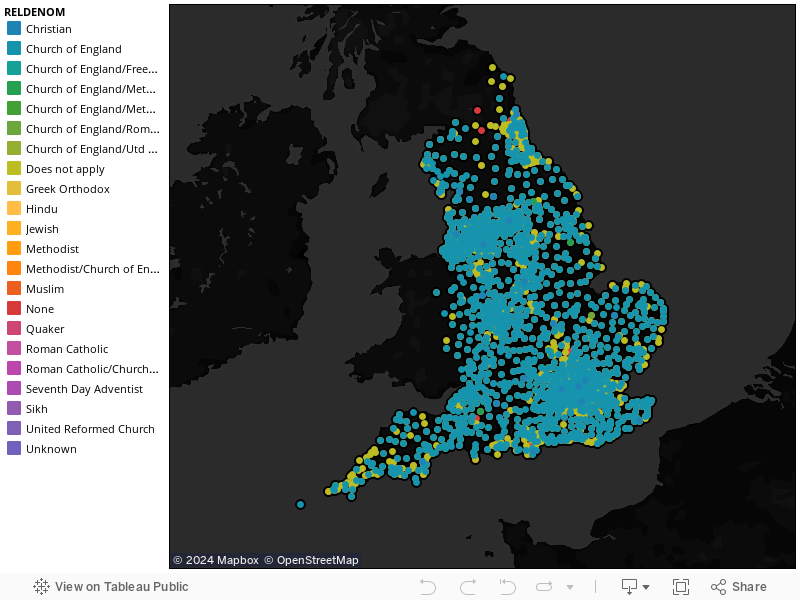
Data: Junior schools by religious denomination

Caroline Beavon has visualised the religious denomination of England’s junior schools (link to data here) – it’s embedded below too.

Posted in Data | Tagged , , , , | Leave a comment

Help Me Investigate Education’s top education stories of 2011

The new year is right around the corner and so the writers at Help Me Investigate Education thought it would be a good time to reflect on the last 12 months. We’ve compiled a list of what we think are the top education stories of 2011, with a focus on investigative articles. Anything we missed? Add your suggestions in the comments. Continue reading

Posted in Links | Leave a comment

The exempt charity status of Academy Trusts…

Recently, on a post on the Help me Investigate Blog, Chris Dodd discussed the ways in which you can look into the actions of charities and not-for-profit organisations.

During the follow-up of this post, he discovered that all Academy Trusts (the charities that run Academy Schools) are, as of August of this year, now exempt charities, which essentially means they no longer register with the Charity Commission.

Instead, they are monitored by the Young People’s Learning Agency on behalf of the Secretary of State for Education, and must report to Companies House, but still withhold the responsibilities and reap the benefits that come with the charitable status.

There are more details outlined on the Charity Commission website outlining the regulation of Academies as charities (ironically, spelt incorrectly in the URL) along with more detailed guidance on exempt charities.

Posted in Uncategorized | Tagged , , , , , | Leave a comment

Access to Unreliable Children’s Services Data…

In early November, Paul blogged about local authorities submitting shaky figures to the Department for Education, as reported on the Channel 4 blogs.

As Paul quoted and Patrick Worrall stated;

“So to recap, these spending figures don’t actually reflect the real amount of money spent; figures from different councils are not comparable with each other; spending in one year can’t be compared usefully with other years; and the government doesn’t propose to audit the figures or correct them when they’re wrong.”

However, the key issue was that there was no link to the flawed data, stopping further investigation, but now, the individual Workbook budgets are now available online on education.gov.uk, broken down by their area.

The data is openly accessible and viewable by local authority, offering the opportunity to look at which areas have submitted data with falsities, mistakes or miscalculations.

It’s worth taking a look at if you’re curious and want to investigate further, or want to see the stats from your local area.

Posted in Data, Links | Tagged , , , , , , | Leave a comment

School buses: transport information from Better Transport

We’ve been digging a bit into the recent story generated by The Campaign for Better Transport’s use of FOI requests to investigate cuts to school bus services to see if the data behind it was available for others to build on. Continue reading

Posted in Data, Links | Tagged , , , | Leave a comment

Investigating academy charities and other nonprofits

Over on the main Help Me Investigate blog, Chris Dodd has written a guide to investigating nonprofit companies, including Academy Schools which, Dodd points out:

“… are regulated by Department for Education (DfE). It’s worth noting that all three regulatory bodies [the Charity Commission, Office of the Scottish Charity Regulator and DfE] are subject to the Freedom of Information act, which means that you may be able to uncover information about a charity’s compliance with the Charities Act 2006. Continue reading

Posted in Links | Tagged , , , , , , | 2 Comments