What is RAISEonline data – and why should it be publicly available?

There’s a vast store of information about our schools, but access is limited.  Read about why we need to make it freely available…

What is it and who runs it?

RAISEonline is an online tool commissioned jointly by the then DCSF and Ofsted to provide data to schools to support their ‘self-evaluation’. It aims to provide a common set of analyses for schools, local authorities, inspectors and School Improvement Partners.

Continue reading

Posted in Data | Tagged , , , , , , , , , , , , , , | 9 Comments

Link: Now you need permission to protest at Birmingham University

Birmingham University has taken out an injunction against anyone occupying its campus in protest. The Guardian reports: Continue reading

Posted in Links | Tagged , , , , | Leave a comment

Link: Tuition fee problems in waiting and other education context

There’s both historical context and future warning in a Guardian interview with Cambridge historian Simon Szreter. Among the best quotes: Continue reading

Posted in Links | Tagged , , | Leave a comment

Links: School transport cuts and obligations

The BBC report on the number of cuts being made to “optional” school transport services, following a series of FOI requests by the Campaign for Better Transport (CBT).

There’s some important background in the report on what services are not optional:

“Local authorities are obliged to provide free school transport for pupils aged between five and 16 years old if their nearest school is more than three miles away. This goes down to two miles for under-eights.

“Children will special educational needs and some from low-income families also get some statutory assistance.

“But councils also provide school transport on a discretionary basis, which is especially valued in rural areas.”

The CBT is also trying to find out more about cuts to bus services more generally. You can add your own information at their website.

Posted in Links | Tagged , , , , | 4 Comments

How to: Use spreadsheets to organize data

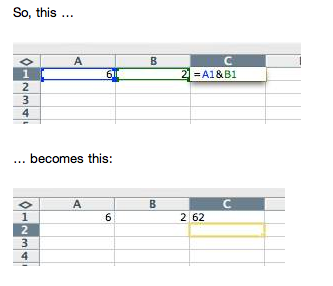
If you’re dealing with a lot of data, one way to organize it is by using a spreadsheet, such as Excel. This is especially useful if you’re interested in data journalism. But the problem for many beginners is where do you start? Continue reading

Posted in Links, Tips and How-Tos | Tagged , , , , , | Leave a comment

The price of a University drop-out 4: Time for some numbers.

In the last post, we worked out the cost weight of a non-completion when it comes to public-funding, and the different variable factors that can send this cost sky-rocketing.

But, it’s key to look at the effect on different institutions, and whether certain types of institution with varied reputations suffer high losses because of, for example, the nature of the degree they offer or  the level of student they take on.

(With Excel data) I took a closer look at my area: Birmingham. I took into acccount Birmingham University (22), Aston University (25) and Birmingham City University (66), three different sized universities with varying ranks in the same city.

The key differences are entry standards, for which Birmingham City University rank far lower which would suggest a higher non-completion rate, and the price band of the degrees, which, in a University with more science-based courses (like a red-brick, like Birmingham) will be higher.

This is evidenced in the yearly non-completion figures for all West Midlands institutions;

With 25% of all HEFCE funded students at Birmingham City University non-completing in 09/10, the suggestion is that low entry standards may make for students that are less likely to commit to completing, especially when you compare that figure with the relatively low 6.5% and 6% for Aston and Birmingham Universities respectively.

However, total non-completion rates are only one factor when considering the total cost to a university. This is exemplified when you look at the total loss to each university and the average cost of each student non-completion;

    Institution Name                          Total Cost               Cost per non-completion
    Aston University                                 £1,409,177.13             £3671.91
    University of Birmingham               £4,307,697.29           £4025.89
    Birmingham City University           £6,175,285.39            £2159.19

As you can tell, the difference between the total cost is much less frightening than the percentage loss, because the average cost for each non-completion is dramatically lower for Birmingham City University, highlighting the risks involved with running massively expensive (Band A and Band B) courses.

The data takes into account HEFCE decided partial completion premiums and the reduced funding delivered for each masters and post-graduate student (because they pay entirely for their course), and is, basically, quite complicated.

The data I compiled (in slightly raw, Google doc form) was drawn from HEFCE-released data from 10/11, and is free for anyone to play with, so if you want to see how your university fares for non-completion rates, take a look.

So what can we take from this? I think the most interesting discussions will be for the future, and how the whole system will dramatically change why tuition fees sky-rocket.

Will the HEFCE deliver the same amount of funding? The amount they fund is based entirely around how much a degree costs to teach (as explained in the previous post), so this figure can’t change just because the tuition fee is increased. How does the 15% decreased in University applications from UK students skew the data for the future?

But, more on this in a future post…
Posted in Data, Follow The Money | Tagged , , , , , , , , , , , | 10 Comments

Question: Who gets the money docked from the striking teachers?

On Nov. 30, two million public sector workers are expected to go on strike. Many on the picket lines will be teachers protesting changes to their pension plan. On Twitter,  @schoolgate asked, “Who gets the money docked from the striking teachers? Does it still go into education in some way?”

This is a great question and definitely deserves some investigating. Continue reading

Posted in Community question | 4 Comments

Links/Data: Ofsted’s 2011 annual report and Schools Minister response

The Office for Standards in Education, Children’s Services and Skills (Ofsted), the education watchdog, has released its annual report and found too many schools are “not pushing children to reach their potential,” says the BBC. Continue reading

Posted in Data, Links | Leave a comment

The price of a University drop-out 3: Exactly how much is each student worth?

In the last post, we looked into how HEFCE derive predicted non-completion figures year on year so that when we unwrap the data we know what we’re looking at.

But, in order to figure out the wider effect on Universities, it’s key to look at exactly how much a student is worth to a university when it comes to public funding. Continue reading

Posted in Data, Follow The Money | Tagged , , , , , | 2 Comments

Data: National Audit Office assess support for young adults with SEN

The National Audit Office (NAO) have released a report assessing the provision available to young adults who have special educational needs.

The report reveals a postcode lottery and advises ministers that by providing more appropriate support they can enable young people to live more independently – and save money in the long run.

Continue reading

Posted in Data | Tagged , , , , | Leave a comment

Investigating the special education system 2: what the data shows

This summer, the Department for Education (DfE) provided a statistical breakdown of special education system. The data throws up some interesting points, here’s two:

1)      The number of children granted statements of special educational need has decreased steadily over the past four years.

Continue reading

Posted in Community question, Data | Tagged , , , , , , , , , , , | 1 Comment

Links: Public Accounts Committee on how funding is allocated

From the BBC:

“Under the system of formula-based grants, funding given to schools with similar needs could vary by up to 40%, the Public Accounts Committee said. Continue reading

Posted in Follow The Money, Links | Tagged , , , | Leave a comment