The Bedroom Tax investigated in Birmingham: no place to go

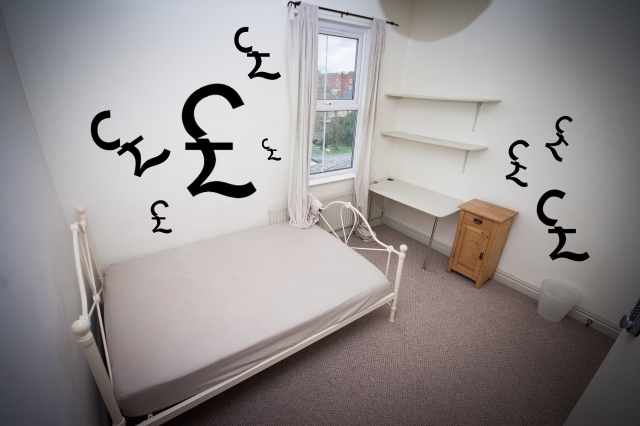
Sharing a room with her four year old disabled son, Brenda*, a single mother from Ladywood, is just one of the 37,000 households in Birmingham living in congested conditions, making the West Midlands responsible for almost half of families living in overcrowded accommodation across the country.

With an increasing demand for properties and an acute shortage of social housing, the idea of taxing council tenants who maintain a spare room seems reasonable, but a closer investigation into the matter by a team of Birmingham journalists reveals that this taxation may not only be affecting society’s most vulnerable but also adding to a worsening housing situation. Continue reading

Illegal use of B&Bs to house homeless families – how to investigate your local figures (and learn some useful data techniques too)

The Guardian’s Randeep Ramesh reports today on the use of bed and breakfasts to house families beyond the legal time limit of six weeks.

The national picture is that half of the 242 authorities who responded had placed homeless families in private accommodation for more than 6 weeks since April 2010. But what’s your local picture?

A good first stop is your local authority’s expenditure above £500. To find this, try a search like ‘expenditure 500 site:bolton.gov.uk‘ – but replace the last bit with your own local authority’s website (excluding the www.).

Download it and open in Excel or Google Docs (if you need to convert it from PDF try pdftoexcelonline.com). Now it’s time to filter… Continue reading

Benefits Cap Forced and Reinforced…

After the last few days of parlaying in the House of Lords, it has emerged that, after reversing some early defeats, a majority of 82 voted in favour of drastic Welfare Reform and a £26,000 benefits cap per UK household come 2013.

With an estimated £600m being saved for the taxpayer, the cost-cutting measures being introduced look set to shake things up for those who have come to rely most on benefits, particularly, as the article above explains, those in high-cost housing;

“The Department of Work and Pensions says 67,000 households will have their benefits reduced in 2013-14, losing £83 a week on average, while 75,000 will see a reduction in 2014-15″

(Large families will also be effected because “it is also argued that the £26,000 cap takes no account of how many children there are in a family”).

There are also whispers of a ‘couple penalty’ being created, because of how beneficial it will be financially to live seperately from a spouse or partner. There are also predictions of families living in smaller houses in increasingly surburbanised areas in order to decrease outgoings and survive on lower publically-funded financial support.

With such a relatively quick turn-around, there are great opportunities for public-driven data journalism to show the effects of the benefit cap, and this is something we’re, inevitably, very excited about.

Data: limited housing availability following benefit caps

The Guardian is following the caps to housing benefits with data on the limited housing now available across the country to “job seekers [, the] disabled, lone parents, others unable to work such as pensioners or those in low paid employment.”:

“The study shows in many parts of the country there will be thousands more welfare claimants than there are properties that can be afforded by benefits alone – raising the possibility that the poor will be compelled to migrate to “benefit ghettoes” along the coast or in the north. Try for yourself by clicking on the accompanying map – for example Brighton and Hove shows”

Help Me Investigate Health contributor Carl Plant has already visualised some of the data here.

No rough sleeping by 2012? The reality of homelessness (video)


Less than 300 days left till the opening of the London 2012 Olympic Games. The clock is ticking, but not only for the international sport event. Rough sleeping should also have its days counted – in theory.

In November 2008 the British government launched a £200m strategy to end homelssness in London by 2012, including a more “compassionate” approach towards rough sleepers. Three years on, how close are we to achieving that goal, and is there enough compassion in the way the homeless are being treated?

Kristina Khoo, a journalist with an MA in International Journalism from Brunel University, has produced an investigative documentary (video below) looking into the government’s pledge to eliminate homelessness and the scepticism surrounding it.

Her investigation gives voice to grassroots charities and rough sleepers, who are not normally included into the government’s strategy. The documentary follows the journey of Mohammad, who has been rough sleeping on London buses for the past 10 years, and reveals some of the crude tactics employed to get the homeless off the streets.

According to the latest figures from the Rough Sleeping Statistics England:

  • In autumn 2010, rough sleeping counts and estimates in England was 1,768.
  • London, the South East and the South West had the highest number of rough sleepers with 415, 310 and 270 respectively. The North East had the lowest number with 49.

If you are interested in launching an investigation about housing and homelessness issues too, or if you already have done some work on these topics, do get in touch. We are recruiting collaborators.