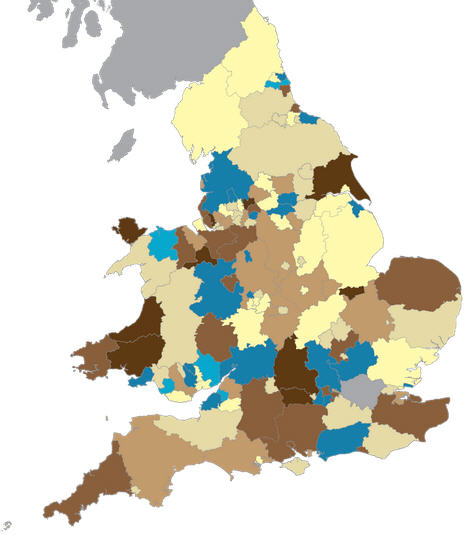
JSA claimants vs Travel for Interview Scheme: can you map this data?

Joining in our investigation on the demise of the Travel for Interview Scheme (TIS) this week, Oliver Conner researched the number of Jobseeker’s Allowance claimants around the country and compared those figures against the amount of TIS being paid out by region.

His analysis reveals some interesting stats: the South East has been awarded the most amount of TIS by far, whereas the highest numbers of JSA claimants are concentrated in London.

Below is a breakdown of the figures. Oliver obtained this data from the Office for National Statistics (ONS) using a tool called Nomis.

Can you map this data, perhaps comparing it to poverty stats in the country? What is the co-relation between wealth, number of JSA claimants and the amount of money JobCentres spent on Travel for Interview for jobseekers? Anyone up for the challenge? Get in touch.

Region JSA Claimants(Source: ONS Nov 2010) % of total TIS Paid (2010/2011) % of total Discrepancy
East 97,790 7.56% £142,739.00 9.50% -1.94%
East Mids 88,420 6.83% £113,216.00 7.54% -0.70%
London 200,640 15.50% £95,115.00 6.33% 9.17%
North East 74,780 5.78% £87,027.00 5.79% -0.01%
North West 164,720 12.73% £211,048.00 14.05% -1.32%
Scotland 127,440 9.85% £111,827.00 7.44% 2.41%
South East 120,880 9.34% £297,968.00 19.83% -10.49%
South West 75,000 5.80% £105,835.00 7.04% -1.25%
Wales 65,150 5.03% £55,559.00 3.70% 1.34%
West Mids 144,930 11.20% £156,750.00 10.43% 0.77%
Yorks & Humb 134,290 10.38% £212,490.00 14.14% -3.76%
1,294,040 £1,589,574.00

Links: The DWP Examinations forums and YouTube channel

Just thought I’d welcome visitors to this site coming from the DWPexaminations message boards. The boards feature a number of threads that may be of interest if you’re looking into Atos medical assessment centres and the stories of those who’ve been through them.

In addition there’s a YouTube channel aggregating videos from a message from Michael Moore to a Guardian film of a protest against Atos (embedded above).

If you know of any other communities discussing Atos or other welfare-related issues, please let us know.


The making of an investigative documentary – Part II

In her previous post, broadcast journalist Kristina Khoo, explained the practical aspects of preparing for and filming a video documentary. In this last instalment, Kristina considers the ethical issues she came across in making an investigative documentary about the homeless in London. Continue reading The making of an investigative documentary – Part II

The making of an investigative documentary – Part I

Kristina Khoo, the journalist behind the investigative documentary on the realities of rough sleepers in London on this site, spent four months gathering information and talking to the homeless and other very vulnerable people in hostels and on the streets. In part one of this post, Kristina shares with HMI Welfare the practical steps involved in making such a documentary, which may help others working on  similar investigations.

Kristina has an MA in International Journalism from Brunel University and is currently available for work. You can contact her on Twitter (@KristinaKhoo) or by leaving a comment here.

Making a an investigative documentary – Part I: Practical steps Continue reading The making of an investigative documentary – Part I

Link: The ESA ‘Fit For Work’ vicious circle

Channel 4 News reports on the “rocketing” numbers of appeals for employment and support allowance (ESA) being heard by the Tribunal Service, which have quadrupled in two years, “from 68,000 in 2009 to a projected 240,000 by the end of this financial year.” The cost to the taxpayer: “£80m and rising”.

“Channel 4 News contacted 30 advice centres across Britain and every single one said they had clients on their second or even third appeal. Jude Hawes is the welfare benefits manager at Stoke CAB.


“She says every day they’re dealing with clients appealing against ESA decisions, many of them for a second time. “I’ve worked in welfare benefits since 1983 and… we’ve never had one benefit one sort of appeal that just dominates the landscape like this.””

You can still catch the broadcast on Channel 4’s Watch Again service here.

Isle of Wight’s cuts to care services ruled unlawful

A decision to restrict eligibility to community care services on the Isle of Wight has been overturned by a high court judge and considered unlawful – a small victory to the disabled under the council’s care.

The Guardian reports:

“Previously, the council had allocated care assistance to adults assessed to be at critical or substantial risk, the top two levels of a four-tier system. But in February the authority, facing a £33m funding gap after central government cuts, voted to restrict this to those at critical risk. The council argued that the high percentage of retired people on the Isle of Wight made it particularly vulnerable to social care costs.”

The legal action was brought on by the lawyers of two 32-year disabled men, both severely autistic and dependent on the council’s care services.

The council agreed to comply with the ruling and said they would not be appealing the court’s ruling.

The Isle of Wight is not the first local authority whose attempt to cut disability services has been considered unlawful. In May 2011 Birmingham City Council was also found to have failed to comply with the Disability Discrimination Act.

Cuts to disability benefits: how is your local authority coping?

As part of its austerity measures, the British government is making cuts on several welfare benefits. One of the affected groups is Britain’s 10 million disable people (figures provided by the Disabled Living Foundation).

How serious is the situation in your local area?

The independent think tank Demos, has mapped out their research data in the area, which allows us to check how well (or badly) each local authority in England and Wales is coping with the budget cuts to disability services. They were ranked as very good, good, well, ok, poor, bad or very bad.

The methodology Demos used to analyse the data and produce a nationwide picture is explained here.

Testimonials compiled on the False Economy site by people affected by the government cuts try to give voice to the current crisis, but more needs to be done.

The Where’s the Benefit campaign put out a call for disabled people in the UK to join their local “Occupy” groups  for a couple of hours every Sunday afternoon and raise awareness on how the welfare reform bill and its proposed cuts are affecting them. WtB also compiled, in a podcast, stories about  the role the Disability Living Allowance (DLA) plays in a disabled person’s life (#myDLA hashtag on Twitter).

In our previous post, Paul Bradshaw wrote about the Department of Work and Pensions’ press release claiming disability benefits were paid “without checks”. The press release triggered several media articles, but published DWP figures were interpreted widely differently on The Daily Mail and The Telegraph. The discrepancy was unpicked on the Left Foot Forward blog.

Have you or a loved one, been affected by cuts to disability benefits? Does the Demos map inspire you to collaborate with an investigation in this area? Would you like to ask Help Me Investigate Welfare to investigate any specific issues/facts/figures? Do you know someone who is already doing that and would like to introduce us to them? Are you good with video cameras and would like to get some live interviews with disabled people joining Occupy on Sundays?

You do not need to be a journalist or researcher in order to help; we will give you guidance and tips. Leave a comment, get in touch.

Links: Disability benefits paid “without checks”? The statistics debunked

Ruth Barnett writes about the Department for Work and Pensions press release with a particularly nastily-spun statistic (bold in original):

“The vast majority (94%) of new claimants got the benefit without having any face-to-face assessment of their needs.”

Ruth writes:

“The rest of the release paints a more complex (or to be less diplomatic, potentially contradictory) picture.


“It seems 42% of claimants had a statement from their GP verifying their medical condition; a further 36% submitted other sources of evidence, a category that can include reports by social workers or occupational therapists.


“Surely a GP is a “healthcare professional”? And surely all these trained staff will have met the claimant in person? Does this not count as a form of assessment? Apparently not.


The DWP’s figures show 16% submitted a claim form alone.”

Ruth got a response from the DWP, who do not feel their statements were misleading. Those statements include a quote from Secretary of State for Work and Pensions Iain Duncan Smith that “At the moment hundreds of millions of pounds are paid out in disability benefits to people who have simply filled out a form.”

She points out:

“The DWP figures show the cost of new claimants who really did just fill in the form last year was […] £30m.”

Also debunked and unpicked on Left Foot Forward.

No rough sleeping by 2012? The reality of homelessness (video)


Less than 300 days left till the opening of the London 2012 Olympic Games. The clock is ticking, but not only for the international sport event. Rough sleeping should also have its days counted – in theory.

In November 2008 the British government launched a £200m strategy to end homelssness in London by 2012, including a more “compassionate” approach towards rough sleepers. Three years on, how close are we to achieving that goal, and is there enough compassion in the way the homeless are being treated?

Kristina Khoo, a journalist with an MA in International Journalism from Brunel University, has produced an investigative documentary (video below) looking into the government’s pledge to eliminate homelessness and the scepticism surrounding it.

Her investigation gives voice to grassroots charities and rough sleepers, who are not normally included into the government’s strategy. The documentary follows the journey of Mohammad, who has been rough sleeping on London buses for the past 10 years, and reveals some of the crude tactics employed to get the homeless off the streets.

According to the latest figures from the Rough Sleeping Statistics England:

  • In autumn 2010, rough sleeping counts and estimates in England was 1,768.
  • London, the South East and the South West had the highest number of rough sleepers with 415, 310 and 270 respectively. The North East had the lowest number with 49.

If you are interested in launching an investigation about housing and homelessness issues too, or if you already have done some work on these topics, do get in touch. We are recruiting collaborators.

Helping connect those investigating the welfare system